
Admin
25-08-2026How Vietnamese People Celebrate Tết
An overview of Vietnamese Tết traditions, combined with B1 practice on present perfect, relative clauses, and first conditional.Lượt xem: 9 Nguồn: Daisy Việt
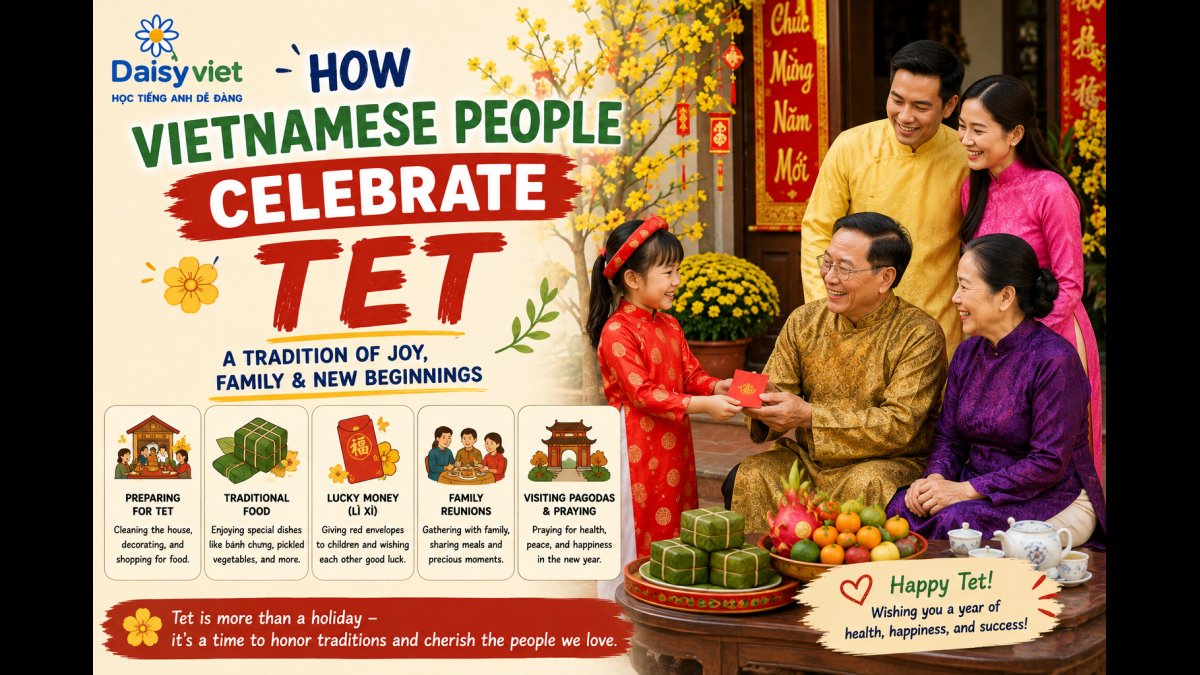
Tết, the Vietnamese Lunar New Year, is a holiday that most families have prepared for weeks in advance. By the time the first day of Tết arrives, houses have usually been cleaned, decorated, and filled with the smell of traditional food.
One tradition that has remained important for generations is visiting relatives. Children, who often receive lucky money in red envelopes, are expected to greet their elders politely and wish them good health. If a family has not visited their grandparents by the second day of Tết, they will usually try to do so before the holiday ends.
Food plays a central role during Tết as well. Families that have gathered for the celebration usually prepare bánh chưng, a square rice cake, along with pickled vegetables and boiled chicken. Many people believe that if they eat certain lucky foods on the first day, the rest of the year will bring good fortune.
Another custom involves the first visitor of the year, known as "xông đất." Vietnamese people believe that whoever enters the house first will influence the family's luck. Because of this belief, some families ask a friend with a successful career to be their first guest.
Although modern life has changed how some people celebrate, the values behind Tết — family, gratitude, and hope for a better year — have not disappeared. For many Vietnamese people, Tết remains the moment when the whole family, wherever they have been living, finally comes home.
Grammar Structure
1. Present Perfect
Formula: S + have/has + V3
Usage: Connects a past action or change to the present situation.
Example: "Although modern life has changed how some people celebrate, the values behind Tết — family, gratitude, and hope for a better year — have not disappeared."
2. Relative Clause
Formula: S + , who/which/that + clause + , + rest of sentence
Usage: Adds extra information about a noun without starting a new sentence.
Example: "Children, who often receive lucky money in red envelopes, are expected to greet their elders politely and wish them good health."
3. First Conditional
Formula: If + S + V (present simple), S + will + V
Usage: Describes a likely result of a real, possible future condition.
Example: "Many people believe that if they eat certain lucky foods on the first day, the rest of the year will bring good fortune."



💬 Bình luận (0)