
Daisy Việt Editorial Team
02-10-2026The Mid-Autumn Festival Through My Grandmother's Eyes
Sitting on her balcony waiting for the full moon, a grandmother remembers handmade lanterns, shared mooncakes and the true meaning of Tết Trung Thu. A B2 reading with practice on the passive voice, reported speech and third conditionals.Lượt xem: 9 Nguồn: Daisy Việt
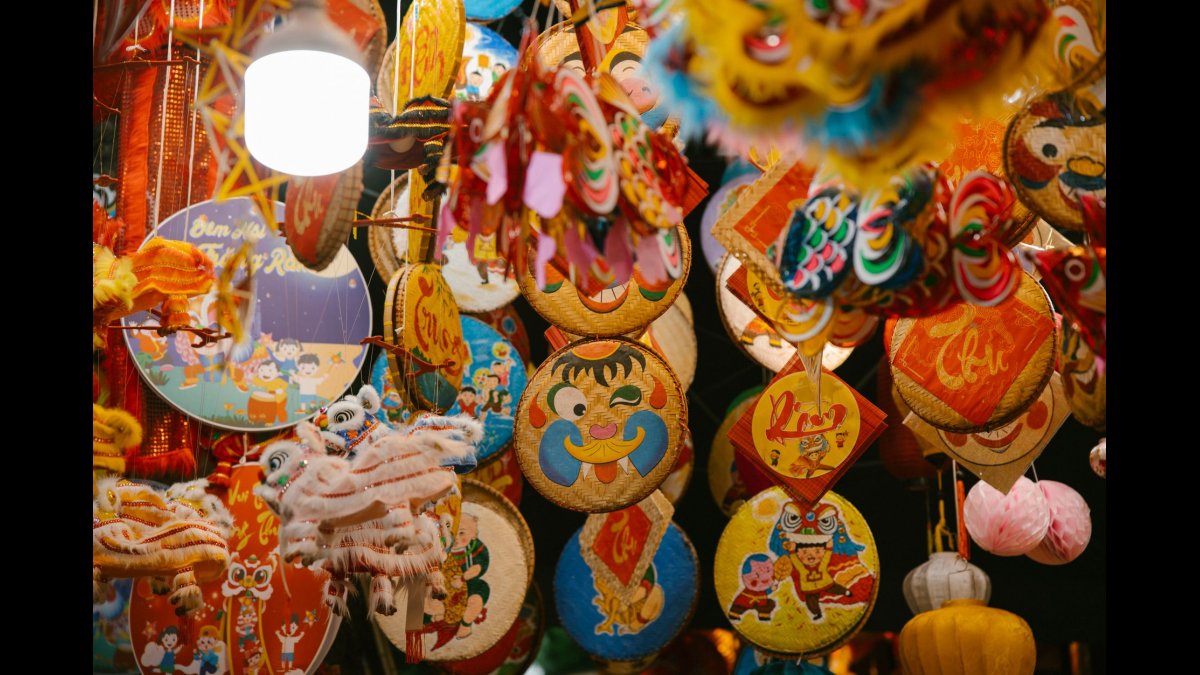
Every year, on the fifteenth day of the eighth lunar month, the streets of Vietnam are filled with lanterns, lion dancers and the smell of freshly baked mooncakes. For children, Tết Trung Thu, or the Mid-Autumn Festival, is one of the most exciting nights of the year. For my grandmother, however, it has always meant something deeper.
Last autumn, while we were sitting on her balcony waiting for the moon to rise, I asked her what the festival had been like when she was a child. She told me that, in her village, there had been no shops selling plastic lanterns that played music. Instead, lanterns were made by hand from bamboo and coloured paper, and every family was expected to help. The star-shaped lantern, she said, took her father a whole evening to build, and she was not allowed to touch it until it was finished.
Mooncakes, too, were very different. Nowadays they are sold in elegant boxes and come in dozens of flavours, from green tea to salted egg yolk. In her childhood, she explained, they were a rare luxury. Her mother would buy a single cake, which was then cut into tiny pieces so that each of the six children could have a taste. "If we had eaten a whole one each, we would have thought we were kings," she laughed.
What struck me most, though, was the way she described the meaning of the festival. Traditionally, the Mid-Autumn Festival was held after the harvest, when farmers finally had time to rest. Parents, who had been working in the fields for months, used this night to make up for the time they had not spent with their children. In that sense, she said, it has always been a festival of gratitude and togetherness rather than just a celebration for kids.
She also reminded me of the legend of Chú Cuội, the man who is said to sit under a banyan tree on the moon. According to the story, he was carried up there when the magic tree he was holding flew into the sky, and he has been waiting to come home ever since. As a child, I simply thought it was a funny tale. Hearing it again from her, I realised it was also a story about missing your family.
When the moon finally appeared, round and bright above the rooftops, my grandmother lit a small paper lantern that she had made herself that afternoon. It was slightly crooked, and far less impressive than the ones being sold downstairs. Yet it was, without doubt, the most beautiful lantern I had ever seen.
Grammar Structure (Phân tích Ngữ pháp)
- Passive Voice (câu bị động) — S + was/were + V3 — hành động được thực hiện, không cần nêu người làm: "lanterns were made by hand from bamboo and coloured paper, and every family was expected to help."
- Reported Speech (câu tường thuật) — S + told + O + (that) + mệnh đề lùi thì (there was → there had been): "She told me that, in her village, there had been no shops selling plastic lanterns that played music."
- Third Conditional (câu điều kiện loại 3) — If + S + had + V3, S + would have + V3 — giả định trái với quá khứ: "If we had eaten a whole one each, we would have thought we were kings"





💬 Bình luận (0)